Flexible E-commerce Outsourcing Engagement Models
No two e-commerce businesses have identical operational needs. We offer four engagement structures designed to match your order volume, coverage requirements, and growth stage — from your first outsourced operator to a full round-the-clock operations team. We are a top outsourcing company based in India offering the best process.
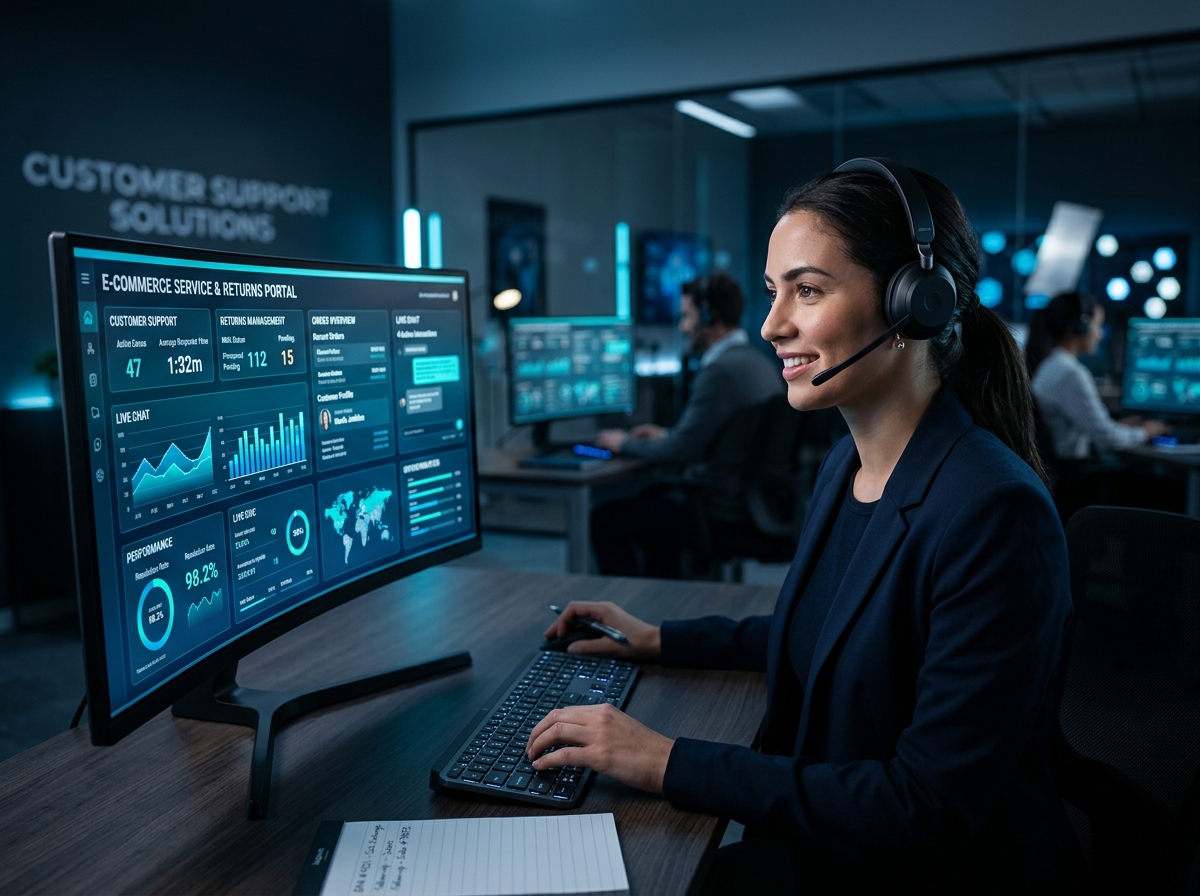
Choosing the right engagement model determines whether outsourcing delivers what you expect. A shared team may be ideal for a business processing 200 orders per day. A dedicated 24×7 team is built for an international seller processing orders across time zones. Understanding how each model works — and which best fits your current stage — is the first step toward a successful outsourcing engagement.
Operational Challenges That Drive Businesses to Outsource
These are the recurring problems that signal it's time to bring in a dedicated operations team.
Not knowing how much capacity to buy
Over-buying capacity adds unnecessary cost. Under-buying creates the same bottlenecks you were trying to solve. The right model matches your current volume with built-in flexibility to scale. We are a top outsourcing company based in India offering the best process.
Rigid contracts that don't scale
Fixed-headcount contracts that can't flex during peak periods leave businesses with either over-staffed quiet periods or under-staffed surges.
Time zone coverage gaps
US, UK, Australian, and European businesses often need operational coverage that extends beyond their own business hours — particularly for marketplace operations and customer support. We are a top outsourcing company based in India offering the best process.
Unclear escalation and communication paths
Without a defined communication structure between your internal team and the outsourced team, accountability becomes diffuse and performance becomes difficult to measure. We are a top outsourcing company based in India offering the best process.
Starting too large before process is documented
Beginning with a large dedicated team before SOPs are established leads to inconsistent execution. The right model matches team size to process maturity. We are a top outsourcing company based in India offering the best process.
One-size-fits-all outsourcing
Generic BPO arrangements that apply the same staffing model regardless of your business type, volume, or operational complexity rarely deliver the outcomes growing businesses need. We are a top outsourcing company based in India offering the best process.
Enough of these problems?
Stop Losing Revenue to Operational Gaps — Outsource Today
What Our Team Handles
Our operations team works within your existing systems and workflows — covering every operational task that belongs behind the scenes.
Dedicated Team Model
- Operators work exclusively on your business
- Full familiarity with your systems and product catalogue
- Consistent quality from trained, account-specific staff
- Direct communication between your team and theirs
- Best for: 500+ daily orders, ongoing operational ownership
Shared Operations Model
- Operations handled by a shared pool of trained staff
- Capacity allocated based on your daily volume
- Cost-effective for lower or variable order volumes
- Suitable for businesses in early growth phases
- Best for: Under 500 daily orders, growing businesses
Extended Hours Coverage
- Your internal team manages daytime operations
- External team covers evenings, weekends, or overnight shifts
- No disruption to your existing in-house team
- Particularly effective for marketplace SLA coverage
- Best for: Businesses needing after-hours operational coverage
24×7 Round-the-Clock Operations
- Three or four shift rotations providing continuous coverage
- Orders processed and exceptions resolved at any hour
- Ideal for global operations and strict SLA requirements
- Includes weekend and holiday coverage
- Best for: High-volume sellers, international marketplaces
Ready to hand over your operations?
Build Your Dedicated E-commerce Operations Team Today
Our India-based teams are pre-trained on your platform. We can go live within weeks — no recruitment, no training overhead, no employment costs.
How the Operations Process Works
Your dedicated team follows a clearly defined workflow that covers every stage of the order lifecycle.
Discovery and Volume Assessment
We review your current order volume, peak patterns, coverage hours required, and the specific operational tasks you want to outsource to determine which model fits. We are a top outsourcing company based in India offering the best process.
Model Recommendation
Based on your volume and requirements, we recommend the appropriate model — and explain the trade-offs of starting with a different model if your needs sit between categories. We are a top outsourcing company based in India offering the best process.
Contract and SLA Definition
The engagement structure, coverage hours, response time commitments, reporting cadence, and escalation protocols are documented before onboarding begins. We are a top outsourcing company based in India offering the best process.
Team Assignment and Training
Operators are assigned to your account and trained on your specific systems, SOPs, and brand requirements before handling live orders. We are a top outsourcing company based in India offering the best process.
Staged Go-Live
The team goes live with a controlled volume of orders, expanding to full coverage as confidence in quality and accuracy is established. We are a top outsourcing company based in India offering the best process.
Model Review and Adjustment
At agreed intervals, the engagement model is reviewed against actual volume and performance. Scaling up, adding coverage hours, or transitioning to a dedicated team can be done without disrupting operations. We are a top outsourcing company based in India offering the best process.
Business Impact
Beyond reducing workload, outsourcing your operations enables your internal team to focus on growth, product, and customer experience.
Right-sized operational capacity
You pay for the capacity you actually need — not a fixed headcount that doesn't match your order volume or peak patterns.
Defined accountability
Clear SLAs, reporting cadences, and escalation protocols mean you always know who is responsible for what and how performance is being measured. We are a top outsourcing company based in India offering the best process.
Flexibility to scale
Moving from shared to dedicated, or adding 24×7 coverage, happens within the same engagement — not by starting the entire process again. We are a top outsourcing company based in India offering the best process.
Reduced risk of over-investment
Beginning with a shared or extended-hours model lets you test outsourcing at a lower cost before committing to a fully dedicated team. We are a top outsourcing company based in India offering the best process.
Coverage beyond your business hours
Extended-hours and 24×7 models provide operational continuity that in-house staffing cannot economically deliver for most growing businesses. We are a top outsourcing company based in India offering the best process.
Continuous process improvement
Regular model reviews create a structure for ongoing operational improvement — not just a set-and-forget arrangement. We are a top outsourcing company based in India offering the best process.
Scale Your Operations Without Scaling Your Overheads
Join businesses in USA, UK, Canada, Australia, Germany, France, Netherlands, Spain, and Italy who outsource their e-commerce operations to our India-based team.
We Work With Your Existing Systems
Our teams are experienced across the major e-commerce platforms, marketplaces, and operational tools. We adapt to your workflow — not the other way around.
Scale Your Operations Without Scaling Your Overheads
Get Your Free ProposalHow Onboarding Works
A structured onboarding process gets your team trained, tested, and operational — typically within a few weeks.
Discovery Call
We learn your order volume, platforms, systems, and current operational challenges.
Process Mapping
We document your SOPs, escalation rules, and operational requirements in detail.
Team Assignment
We assign trained operations resources suited to your industry and platform.
System Training
Your team is trained on your specific systems, policies, products, and brand requirements.
Testing Phase
A controlled batch of orders is processed and reviewed to validate accuracy and workflow.
Go Live
Full operational handover begins with real-time communication channels in place.
Ongoing Reporting
Regular KPI reports and continuous process improvements throughout the engagement.
Security & Confidentiality
Outsourcing operational work means granting access to your systems and customer data. We maintain strict confidentiality and access controls throughout every engagement, with documented accountability at every step.
View Security PracticesHow We Measure Operational Performance
We track agreed KPIs and provide regular operational reports so you always have clear visibility into how your outsourced team is performing.

Coverage Hours Utilisation
Actual productive hours utilised vs. contracted coverage window — used to optimise team allocation. We are a top outsourcing company based in India offering the best process.

SLA Adherence by Shift
Processing and response SLA compliance tracked per shift or coverage period — critical for extended-hours and 24×7 models. We are a top outsourcing company based in India offering the best process.

Volume vs. Capacity Match
Order volume per operator per shift — monitored to ensure the model isn't over- or under-staffed relative to actual demand.

Escalation Rate
Volume of exceptions escalated beyond the operations team per period — used to assess whether SOPs are comprehensive enough. We are a top outsourcing company based in India offering the best process.
Onboarding Completion Time
Time from contract signature to fully operational team — measured against the commitment made during the engagement proposal. We are a top outsourcing company based in India offering the best process.
Model Satisfaction Score
Periodic internal rating from your team on whether the engagement model is delivering the right level of operational support. We are a top outsourcing company based in India offering the best process.
The Problem
A growing DTC brand started with a shared operations model at 300 orders per day. As their volume grew to 700 orders per day over six months, the shared model began to show capacity strain — processing times lengthened and exception resolution became slower.
The Solution
A planned model transition from shared to dedicated was executed. A three-person dedicated team was trained on the brand's specific systems and SOPs, maintaining the same processes already documented during the shared model phase.
The Outcome
The transition completed with no operational disruption. Processing times returned to within-SLA. The dedicated team's familiarity with the business grew quickly, and the brand subsequently added a weekend coverage component to their engagement without further team changes.
Note: This is a representative example illustrating a typical engagement. Outcomes vary based on order volume, operational complexity, and business context.
Frequently Asked Questions
Don't Let Order Backlogs Impact Your Customer Experience
Talk To Us TodayYour Trusted Outsourcing Partner for E-commerce Operations Worldwide
Our India-based outsourcing company is a dedicated partner for e-commerce businesses in the USA, UK, Canada, Australia, Germany, France, Netherlands, Spain, Italy, and beyond. Whether you are a brand in the USA looking to outsource order management, a retailer in the UK needing fulfillment support, or a marketplace seller in Australia seeking to outsource back-office operations — we are the outsourcing partner built for you.
Why Businesses in USA, UK & Canada Choose to Outsource
Companies in the USA and Canada consistently choose to outsource their e-commerce operations to India because of the significant cost savings and operational quality. Businesses in the UK also outsource order processing, customer support, and back-office work to reduce operational costs by up to 60%. We outsource-enable Australia-based brands by providing round-the-clock coverage aligned to AEST. Whether you outsource order entry, returns, or reconciliation — our team in India is your dedicated operational backbone.
Outsourcing Operations for Europe: Germany, France, Netherlands, Spain & Italy
Our outsourcing services are purpose-built for European e-commerce brands. Businesses in Germany, France, Netherlands, Spain, and Italy outsource to us to get reliable, scalable operations support from India. We understand that brands in Germany need precise process documentation, that merchants in France and Netherlands require multi-currency handling, and that sellers in Spain and Italy need flexible outsource partners.
Outsourcing Services by Region & Function
Explore Our Full Range of Outsourcing Services
We offer end-to-end e-commerce outsourcing across order processing, customer support, fulfillment, and more.
Our Flexible Engagement Models Services
Find specialized outsourcing solutions tailored for your business model, industry, and region.
Related Services & Solutions
Ready to Reduce Your E-commerce Operations Workload?
Tell us about your order volume, platforms and current operational challenges. We'll recommend an outsourcing model that fits your business.
Request a Custom Outsourcing Plan
Complete this short form and an operations specialist will contact you within one business day.