E-commerce Order Fulfillment Support Services
Fulfillment support is the operational layer between a confirmed order and a delivered parcel. Our dedicated team coordinates between your systems, 3PL partners, dropship vendors, and customers — so orders move from confirmed to shipped without bottlenecks or missed steps. We are a top outsourcing company based in India offering the best process.
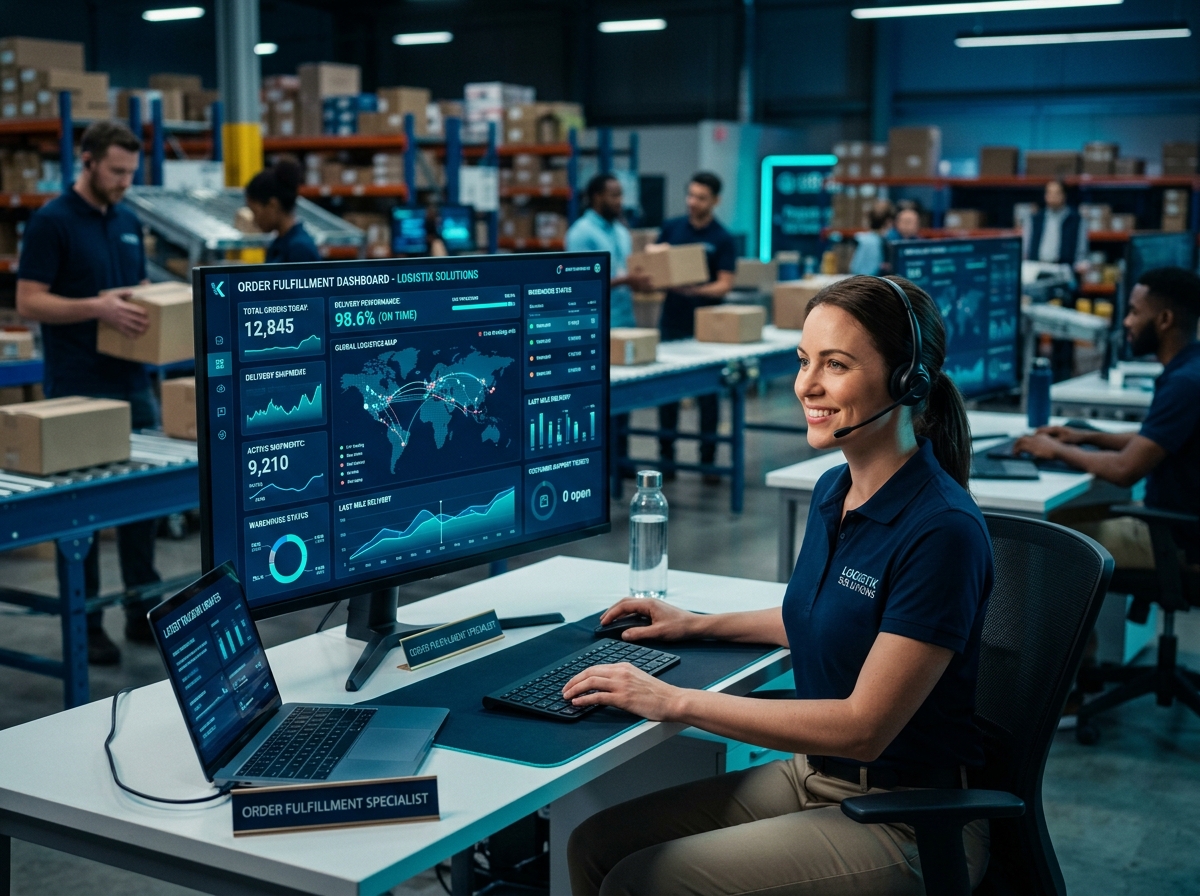
The Gap Between Order Confirmation and Delivery Is Where Operations Break Down
Physical fulfillment — picking, packing, and shipping — is handled by your warehouse or 3PL. But the coordination work that makes it happen accurately and on time is a separate operational function that requires consistent daily management. Most growing businesses understaff this function, leading to fulfillment delays, carrier exceptions, and reactive customer service.
3PL communication gaps
Order-specific instructions, priority flags, and special packaging requirements are lost when communication with your fulfillment partner is inconsistent or manual. We are a top outsourcing company based in India offering the best process.
Shipment tracking failures
Tracking numbers not captured or updated promptly lead to WISMO (Where Is My Order?) enquiries that consume customer support capacity. We are a top outsourcing company based in India offering the best process.
Delivery exception backlog
Failed deliveries, incorrect addresses, and carrier exceptions pile up without dedicated monitoring — leading to returned parcels and customer frustration. We are a top outsourcing company based in India offering the best process.
Dropship vendor coordination
Dropship orders require vendor-specific communication, order confirmation, and tracking collection — each adding manual effort at scale. We are a top outsourcing company based in India offering the best process.
Inventory mismatches
Orders routed to a 3PL for items that are out of stock at that location cause fulfillment failures that aren't caught until it's too late.
Post-shipment issue handling
Damaged deliveries, lost parcels, and re-delivery requests require coordination between your 3PL, the carrier, and the customer — none of which happens automatically. We are a top outsourcing company based in India offering the best process.
What Our Operations Team Handles
Every task listed below is performed by a trained, dedicated operations team working within your existing systems and workflows.
3PL & Warehouse Coordination
- Order communication and confirmation with 3PL
- Priority and special-handling instruction transmission
- Fulfillment status checks and escalation
- Pick-and-pack error identification and correction
- Multi-warehouse routing and inventory allocation
Dropship Vendor Management
- Dropship order routing to the correct vendor
- Vendor order confirmation and acknowledgement
- Tracking number collection from each vendor
- Vendor delay follow-up and escalation
- Multi-vendor order coordination for split shipments
Shipment Tracking & Monitoring
- Tracking number capture and entry into your system
- Proactive shipment status monitoring
- Carrier exception identification and flagging
- Failed delivery attempt management
- Tracking information provided to customer support teams
Inventory Coordination
- Pre-routing inventory availability checks
- Out-of-stock fulfillment exception handling
- Inventory hold and release coordination
- Multi-location stock allocation for split orders
- Low-stock alerts flagged to the relevant team
Delivery Exception Management
- Failed delivery identification and re-attempt coordination
- Address correction requests submitted to carriers
- Returned parcel coordination and re-ship routing
- Damaged delivery documentation and claim initiation
- Customer communication for all delivery exceptions
Reporting & Communication
- Daily fulfillment status and exception reports
- Shipment tracking capture rate monitoring
- Vendor performance and delivery time tracking
- Carrier exception summary reporting
- Fulfillment SLA adherence by channel and partner
Stop Letting Operational Bottlenecks Limit Your Growth
Build your dedicated offshore team today and scale your capacity without scaling your overhead.
End-to-End Operations Workflow
Every order follows a structured process handled entirely by your dedicated operations team.
Order Confirmed & Ready for Fulfillment
A validated, payment-confirmed order is identified as ready for fulfillment and routed to the appropriate fulfillment partner or vendor. We are a top outsourcing company based in India offering the best process.
Fulfillment Partner Notified
The 3PL, warehouse, or dropship vendor receives the order with all required details: SKUs, quantities, shipping method, priority flags, and special instructions. We are a top outsourcing company based in India offering the best process.
Confirmation Received
Acknowledgement that the order has been received and entered into the fulfillment partner's system is confirmed and recorded.
Inventory Confirmed
Stock availability at the fulfillment location is verified. Out-of-stock situations trigger an exception workflow immediately rather than at point of pick failure. We are a top outsourcing company based in India offering the best process.
Shipment Dispatched & Tracked
Once the parcel is collected by the carrier, the tracking number is captured, entered into your system, and monitored for progress. We are a top outsourcing company based in India offering the best process.
Exceptions Monitored & Resolved
Any carrier exceptions — delays, failed deliveries, address issues — are identified, escalated to the appropriate party, and resolved according to your process. We are a top outsourcing company based in India offering the best process.
Delivery Confirmed
Successful delivery is confirmed in your system. Any remaining post-delivery tasks — such as reconciliation or customer follow-up — are completed per your workflow. We are a top outsourcing company based in India offering the best process.
Business Impact of Outsourcing Operations
The value of outsourcing extends beyond cost savings. It directly affects your operational performance, customer experience, and internal capacity.
Fewer fulfillment errors
Structured communication with your 3PL and vendors reduces pick errors, wrong-item shipments, and missed special instructions. We are a top outsourcing company based in India offering the best process.
Faster tracking capture
Systematic tracking collection means fewer WISMO enquiries and better delivery experience without manual chasing. We are a top outsourcing company based in India offering the best process.
Proactive exception resolution
Delivery exceptions are caught early and acted on — reducing the volume that escalates to customer complaints or returns. We are a top outsourcing company based in India offering the best process.
Better vendor accountability
Consistent monitoring of dropship vendor performance gives you visibility and leverage to address recurring delays. We are a top outsourcing company based in India offering the best process.
Reduced internal coordination overhead
Your team is freed from daily back-and-forth with 3PLs, vendors, and carriers — giving back operational bandwidth. We are a top outsourcing company based in India offering the best process.
Scalable fulfillment coordination
As order volume grows, your coordination function scales with it — without relying on already-stretched internal staff. We are a top outsourcing company based in India offering the best process.
Ready to see these outcomes in your business?
Talk to an Operations ExpertWho Should Outsource This?
This service is designed for businesses where operational complexity is growing faster than internal capacity — and where outsourcing to a trained team is the practical path forward.
Built for Growing E-commerce Operations
We Work With Your Existing Systems
Our teams are experienced across the major e-commerce platforms, marketplaces, and operational tools. We adapt to your workflow — not the other way around.
Scale Your Operations Without Scaling Your Overheads
Get Your Free ProposalIn-House Operations vs. Outsourced Operations
Understanding the trade-offs helps clarify whether outsourcing is the right move for your business at this stage.
| Area | In-House | Outsourced with OpSource |
|---|---|---|
| Recruitment | Time-consuming hiring process; weeks or months to fill roles | Pre-trained operational resources available within weeks |
| Training | Internal time and resource investment to onboard each hire | Structured onboarding trained to your SOPs and systems |
| Staff costs | Salary, benefits, employer taxes, HR overheads | Predictable monthly fee; no hidden employment costs |
| Peak scalability | Difficult and expensive to scale quickly for seasonal demand | Add capacity within days when order volume spikes |
| Coverage hours | Typically limited to local business hours, 5 days a week | Extended hours, weekend, and 24×7 coverage available |
| Operational continuity | Disrupted by holidays, resignations and sick leave | Continuity maintained through team redundancy and handover processes |
| Reporting & visibility | Typically informal; reporting depends on individual effort | Structured operational reporting and KPI dashboards |
| Process documentation | Often undocumented or inconsistent across individuals | Documented SOPs maintained and updated throughout the engagement |
Flexible Engagement Models
Every business has different operational needs. We offer engagement structures that match your order volume, coverage requirements, and growth stage.
Dedicated Team
A team of operators works exclusively on your business. They learn your systems, policies, and brand voice. Best for ongoing operational ownership.
Shared Operations
Your operations are handled by a shared pool of trained operators, allocated based on your volume. Suitable for lower or variable workloads.
Extended Hours Coverage
Your primary team manages daytime operations; our team provides evening, weekend, or overnight coverage to bridge the gap.
24×7 Operations
Round-the-clock shift coverage ensures orders are processed and exceptions are resolved without delay, regardless of time zone.
Ready to Build Your Dedicated E-commerce Team?
Consult With Us TodayHow Onboarding Works
A structured onboarding process ensures your operations team is trained, tested, and producing accurate results before handling your full order volume.
Discovery
We review your order volume, platforms, current workflow, team structure, and key pain points to understand exactly what needs to be outsourced.
Process Mapping
We document your SOPs, escalation rules, system access requirements, and reporting expectations in a shared operations handbook.
Team Setup
We assign trained operational resources aligned to your business requirements and workload profile.
Training
The team receives detailed training on your systems, product catalogue, customer policies, and brand voice before handling live orders.
Testing & Validation
We process a controlled batch of test orders to validate accuracy, identify edge cases, and refine the workflow before going live.
Go Live
Your dedicated operations team begins handling live orders with real-time communication and escalation protocols in place.
Reporting & Optimisation
We track agreed KPIs, share regular operational reports, and continuously refine processes as your business evolves.
Security & Confidentiality
Operational outsourcing involves access to your systems, customer data, and business workflows. We maintain strict confidentiality and access controls throughout every engagement.
Learn About Our Security PracticesHow We Measure Operational Performance
We track agreed KPIs and share structured operational reports so you always have visibility into how your outsourced team is performing.

Tracking Capture Rate
Percentage of shipped orders with tracking numbers recorded in your system within the agreed time window after dispatch. We are a top outsourcing company based in India offering the best process.

Fulfillment Confirmation Rate
Percentage of orders confirmed as received by your 3PL or vendor within the defined SLA window. We are a top outsourcing company based in India offering the best process.

Exception Rate
Volume of delivery exceptions (failed deliveries, address issues, carrier delays) as a proportion of total shipments. We are a top outsourcing company based in India offering the best process.

Exception Resolution Time
Average time from exception identification to resolution — tracked by exception type (address, failed delivery, damage, etc.). We are a top outsourcing company based in India offering the best process.
Vendor Response Time
Average time for dropship vendors to confirm orders and provide tracking — monitored to identify underperforming suppliers. We are a top outsourcing company based in India offering the best process.
WISMO Escalation Rate
Volume of order tracking enquiries escalated to customer support — used to identify systemic tracking or communication gaps. We are a top outsourcing company based in India offering the best process.

The Problem
A DTC brand using a third-party logistics provider for all fulfillment found that tracking was inconsistently captured, vendor exceptions went unaddressed for 48+ hours, and their small customer support team spent most of their time answering delivery status questions rather than handling genuine issues.
The Solution
A dedicated fulfillment support team took over daily 3PL communication, tracking capture, and exception monitoring. An exception protocol was documented, and a daily exception report was shared with the internal team each morning.
The Outcome
Tracking information was recorded consistently across all shipments. Exceptions were identified and actioned within hours rather than days. The customer support team's workload shifted from WISMO enquiries toward issue resolution — improving both efficiency and customer experience.
Note: This is a representative use case illustrating a typical engagement. Specific outcomes vary based on order volume, complexity and business context.
Frequently Asked Questions
Don't Let Order Backlogs Impact Your Customer Experience
Talk To Us TodayExplore Our Full Range of Outsourcing Services
We offer end-to-end e-commerce outsourcing across order processing, customer support, fulfillment, and more.
Our Fulfillment Support Services Services
Find specialized outsourcing solutions tailored for your business model, industry, and region.
Your Trusted Outsourcing Partner for E-commerce Operations Worldwide
Our India-based outsourcing company is a dedicated partner for e-commerce businesses in the USA, UK, Canada, Australia, Germany, France, Netherlands, Spain, Italy, and beyond. Whether you are a brand in the USA looking to outsource order management, a retailer in the UK needing fulfillment support, or a marketplace seller in Australia seeking to outsource back-office operations — we are the outsourcing partner built for you.
Why Businesses in USA, UK & Canada Choose to Outsource
Companies in the USA and Canada consistently choose to outsource their e-commerce operations to India because of the significant cost savings and operational quality. When you outsource to an India-based team, you can run operations 24×7 without the overhead of US or Canadian salaries. Businesses in the UK also outsource order processing, customer support, and back-office work to reduce operational costs by up to 60%. We outsource-enable Australia-based brands by providing round-the-clock coverage aligned to AEST. Whether you outsource order entry, returns, or reconciliation — our team in India is your dedicated operational backbone.
Outsourcing Operations for Europe: Germany, France, Netherlands, Spain & Italy
Our outsourcing services are purpose-built for European e-commerce brands. Businesses in Germany, France, Netherlands, Spain, and Italy outsource to us to get reliable, scalable operations support from India. We understand that brands in Germany need precise process documentation, that merchants in France and Netherlands require multi-currency handling, and that sellers in Spain and Italy need flexible outsource partners who adapt to local market demands. Our outsource model covers all of this seamlessly.
Outsourcing Services by Region & Function
Related Services & Solutions
Ready to Reduce Your E-commerce Operations Workload?
Tell us about your order volume, platforms and current operational challenges. We'll review your workflow and recommend an outsourcing model that fits your business.
Request a Custom Outsourcing Plan
Complete this short form and an operations specialist will contact you within one business day.