E-commerce Order Processing Outsourcing Services
Stop letting manual order entry, validation errors, and exception backlogs slow down your fulfillment. Outsource e-commerce order processing to a dedicated India-based operations team that works within your existing systems and keeps every order moving. We are a top outsourcing company based in India offering the best process.
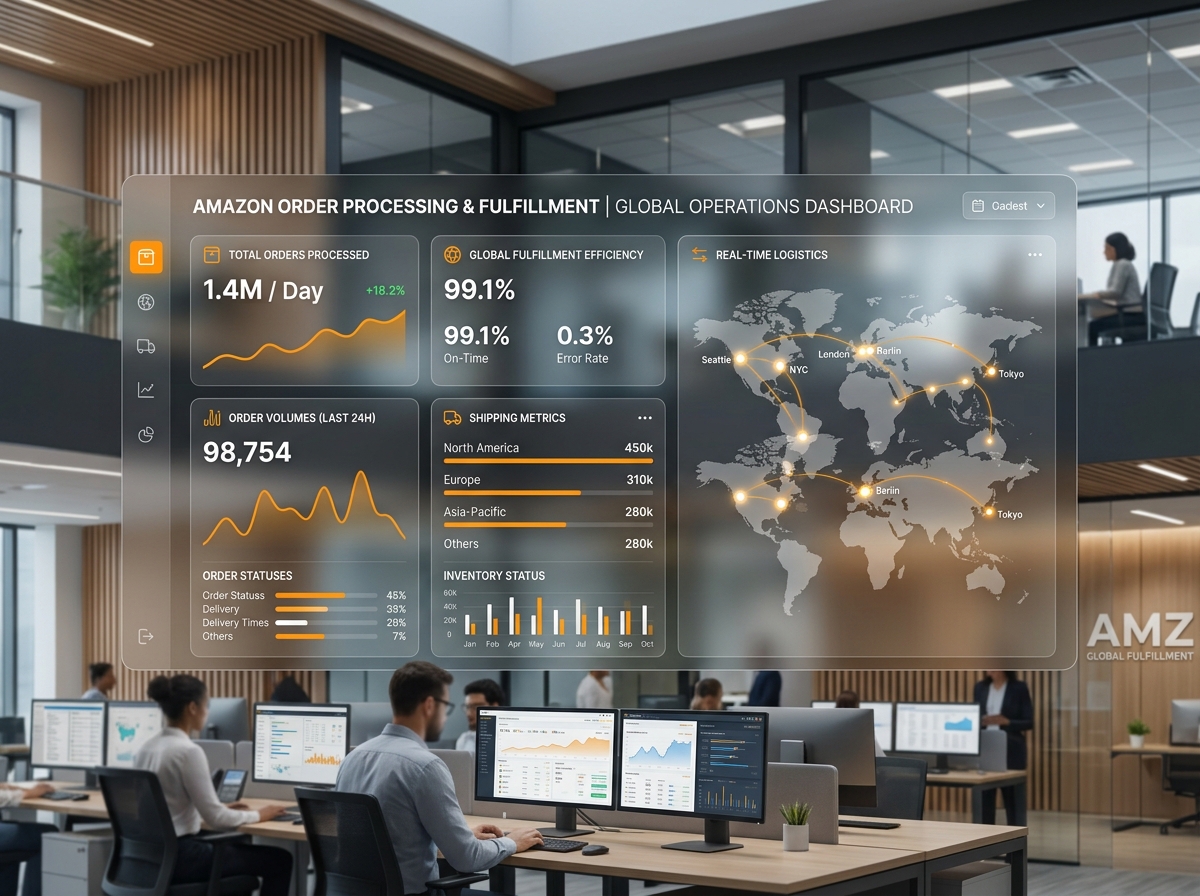
Growing Order Volumes Shouldn't Mean Growing Operational Complexity
As your store scales, the hidden work behind every order grows too. Validating addresses, catching payment issues, handling out-of-stock situations, coordinating with 3PLs, and managing customer-driven order changes are all manual, repetitive tasks that consume your internal team's time and attention — time that should be spent on growth.
Order entry bottlenecks
High-volume stores receive hundreds or thousands of orders daily. Manual entry into ERPs or disconnected systems creates delays that compound over time. We are a top outsourcing company based in India offering the best process.
Address and payment errors
Invalid shipping addresses and payment exceptions caught late in the process cause shipment delays and unnecessary customer friction. We are a top outsourcing company based in India offering the best process.
Exception handling overhead
Out-of-stock orders, fraud flags, order holds, and special handling cases require human judgment and follow-through that distracts your core team. We are a top outsourcing company based in India offering the best process.
Peak season workload spikes
Q4, sales events, and product launches drive order surges that overwhelm lean internal teams and lead to delayed fulfillment and customer complaints. We are a top outsourcing company based in India offering the best process.
Multi-channel complexity
Managing orders from your own website, Amazon, Walmart, eBay and other channels simultaneously multiplies the operational workload significantly. We are a top outsourcing company based in India offering the best process.
Fulfillment coordination delays
Communicating order-specific requirements to 3PLs, dropship vendors, or warehouse teams consumes time when done manually at scale. We are a top outsourcing company based in India offering the best process.
What Our Operations Team Handles
Every task listed below is performed by a trained, dedicated operations team working within your existing systems and workflows.
Order Entry & Validation
- Manual order entry into ERP, OMS or platform admin
- Order data validation against customer records
- SKU and product variant verification
- Duplicate order detection and resolution
- Special instruction capture and routing
Payment & Address Verification
- Payment status confirmation and exception flagging
- Address verification and correction
- Fraud flag review and escalation per your rules
- Failed payment follow-up coordination
- Order hold management and release
Order Modification & Cancellation
- Address change requests processed before shipment
- Item substitution or quantity adjustment handling
- Order cancellation requests processed promptly
- Customer communication for all order changes
- Partial order fulfilment coordination
Exception Management
- Out-of-stock order handling and customer notification
- Backorder management and expected availability updates
- Delayed fulfillment communication
- Escalation of unresolved exceptions per your protocols
- Exception tracking and reporting
Fulfillment Coordination
- 3PL and warehouse notification for outbound orders
- Dropship vendor order routing and confirmation
- Shipment confirmation and tracking number capture
- Delivery exception handling and carrier follow-up
- Multi-location inventory routing
Reporting & Visibility
- Daily order volume and status reports
- Exception and backlog reports
- Processing SLA tracking
- Multi-channel order summary reporting
- Operational performance dashboards (as agreed)
Stop Letting Operational Bottlenecks Limit Your Growth
Build your dedicated offshore team today and scale your capacity without scaling your overhead.
End-to-End Operations Workflow
Every order follows a structured process handled entirely by your dedicated operations team.

Order Received
New orders are identified in your platform or OMS — whether from your own website, a marketplace, or a B2B customer portal. We are a top outsourcing company based in India offering the best process.
Order Validated
Every order is reviewed against your defined criteria: product availability, customer eligibility, order completeness, and special instructions. We are a top outsourcing company based in India offering the best process.
Payment & Address Confirmed
Payment status is verified and the shipping address is validated. Flags or errors are escalated per your defined rules before the order proceeds. We are a top outsourcing company based in India offering the best process.
Inventory Checked & Confirmed
Stock availability is confirmed with your ERP, WMS, or 3PL system. Backordered or out-of-stock items trigger defined exception workflows. We are a top outsourcing company based in India offering the best process.
Fulfillment Partner Notified
The confirmed order is communicated to your 3PL, warehouse team, or dropship supplier with all required details for accurate, timely pick-and-pack. We are a top outsourcing company based in India offering the best process.
Shipment Processed & Tracked
Once the order has shipped, tracking information is captured and recorded in your system. The customer is updated if your process requires it. We are a top outsourcing company based in India offering the best process.
Exceptions Resolved
Any delivery exceptions — failed deliveries, address issues, damaged shipments — are identified and handled according to your established escalation process. We are a top outsourcing company based in India offering the best process.
Order Confirmed & Closed
Delivered orders are marked complete in your system. Any reconciliation tasks are performed and the order is closed out with full audit trail. We are a top outsourcing company based in India offering the best process.
Business Impact of Outsourcing Operations
The value of outsourcing extends beyond cost savings. It directly affects your operational performance, customer experience, and internal capacity.
Reduced fulfillment delays
Orders are validated and routed without the queuing that happens when processing is tied to internal team availability. We are a top outsourcing company based in India offering the best process.
Lower order error rate
Structured validation processes reduce address errors, payment mismatches, and incorrect SKU routing that lead to failed shipments. We are a top outsourcing company based in India offering the best process.
Scalable for peak periods
Your operations team can handle higher volumes during Q4, promotions, and product launches without emergency hiring. We are a top outsourcing company based in India offering the best process.
Internal team freed up
Your founders, managers, and specialists reclaim time that was previously consumed by repetitive order administration. We are a top outsourcing company based in India offering the best process.
Improved exception resolution
Exception cases are handled consistently, tracked, and resolved according to your documented rules — not ad hoc. We are a top outsourcing company based in India offering the best process.
Operational reporting visibility
You receive regular reports on order volumes, processing times, exception counts, and SLA adherence — without chasing your team for data. We are a top outsourcing company based in India offering the best process.
Ready to see these outcomes in your business?
Talk to an Operations ExpertWho Should Outsource This?
This service is designed for businesses where operational complexity is growing faster than internal capacity — and where outsourcing to a trained team is the practical path forward.
Built for Growing E-commerce Operations
We Work With Your Existing Systems
Our teams are experienced across the major e-commerce platforms, marketplaces, and operational tools. We adapt to your workflow — not the other way around.
 Shopify
 Amazon Seller Central
Scale Your Operations Without Scaling Your Overheads
Get Your Free ProposalIn-House Operations vs. Outsourced Operations
Understanding the trade-offs helps clarify whether outsourcing is the right move for your business at this stage.
| Area | In-House | Outsourced with OpSource |
|---|---|---|
| Recruitment | Time-consuming hiring process; weeks or months to fill roles | Pre-trained operational resources available within weeks |
| Training | Internal time and resource investment to onboard each hire | Structured onboarding trained to your SOPs and systems |
| Staff costs | Salary, benefits, employer taxes, HR overheads | Predictable monthly fee; no hidden employment costs |
| Peak scalability | Difficult and expensive to scale quickly for seasonal demand | Add capacity within days when order volume spikes |
| Coverage hours | Typically limited to local business hours, 5 days a week | Extended hours, weekend, and 24×7 coverage available |
| Operational continuity | Disrupted by holidays, resignations and sick leave | Continuity maintained through team redundancy and handover processes |
| Reporting & visibility | Typically informal; reporting depends on individual effort | Structured operational reporting and KPI dashboards |
| Process documentation | Often undocumented or inconsistent across individuals | Documented SOPs maintained and updated throughout the engagement |
Flexible Engagement Models
Every business has different operational needs. We offer engagement structures that match your order volume, coverage requirements, and growth stage.
Dedicated Team
A team of operators works exclusively on your business. They learn your systems, policies, and brand voice. Best for ongoing operational ownership.
Shared Operations
Your operations are handled by a shared pool of trained operators, allocated based on your volume. Suitable for lower or variable workloads.
Extended Hours Coverage
Your primary team manages daytime operations; our team provides evening, weekend, or overnight coverage to bridge the gap.
24×7 Operations
Round-the-clock shift coverage ensures orders are processed and exceptions are resolved without delay, regardless of time zone.
Ready to Build Your Dedicated E-commerce Team?
Consult With Us TodayHow Onboarding Works
A structured onboarding process ensures your operations team is trained, tested, and producing accurate results before handling your full order volume.
Discovery
We review your order volume, platforms, current workflow, team structure, and key pain points to understand exactly what needs to be outsourced.
Process Mapping
We document your SOPs, escalation rules, system access requirements, and reporting expectations in a shared operations handbook.
Team Setup
We assign trained operational resources aligned to your business requirements and workload profile.
Training
The team receives detailed training on your systems, product catalogue, customer policies, and brand voice before handling live orders.
Testing & Validation
We process a controlled batch of test orders to validate accuracy, identify edge cases, and refine the workflow before going live.
Go Live
Your dedicated operations team begins handling live orders with real-time communication and escalation protocols in place.
Reporting & Optimisation
We track agreed KPIs, share regular operational reports, and continuously refine processes as your business evolves.
Security & Confidentiality
Operational outsourcing involves access to your systems, customer data, and business workflows. We maintain strict confidentiality and access controls throughout every engagement.
Learn About Our Security PracticesHow We Measure Operational Performance
We track agreed KPIs and share structured operational reports so you always have visibility into how your outsourced team is performing.

Order Processing Accuracy
Percentage of orders processed without errors requiring correction or rework — tracked per agreed validation criteria. We are a top outsourcing company based in India offering the best process.

Order Processing Time
Average time from order receipt to validated, routed status — measured against your agreed SLA window. We are a top outsourcing company based in India offering the best process.

SLA Adherence Rate
Percentage of orders processed within the defined time window across shifts and order types. We are a top outsourcing company based in India offering the best process.

Exception Resolution Time
Average time from exception identification to resolution or escalation — tracked by exception category. We are a top outsourcing company based in India offering the best process.
Exception Rate
Volume of exceptions as a proportion of total orders — used to identify recurring issues in the order workflow. We are a top outsourcing company based in India offering the best process.
Daily Order Throughput
Total orders processed per day, per operator, and per channel — used to manage capacity and staffing. We are a top outsourcing company based in India offering the best process.

The Problem
A DTC brand processing 800 orders per day found their two-person operations team spending over five hours daily on order validation, address corrections, and 3PL communication — leaving little time for anything else.
The Solution
A dedicated order processing team of three operators was onboarded over two weeks, trained on the brand's Shopify workflow, 3PL portal, and exception protocols. The team took over all daily order entry, validation, fulfillment routing, and exception management.
The Outcome
The internal team was freed from daily order administration. Order validation errors dropped as structured workflows replaced ad-hoc manual checking. The team handled a 40% volume increase during a promotional period without any additional emergency hiring.
Note: This is a representative use case illustrating a typical engagement. Specific outcomes vary based on order volume, complexity and business context.
Frequently Asked Questions
Don't Let Order Backlogs Impact Your Customer Experience
Talk To Us TodayExplore Our Full Range of Outsourcing Services
We offer end-to-end e-commerce outsourcing across order processing, customer support, fulfillment, and more.
Our Order Processing Outsourcing Services
Find specialized outsourcing solutions tailored for your business model, industry, and region.
Your Trusted Outsourcing Partner for E-commerce Operations Worldwide
Our India-based outsourcing company is a dedicated partner for e-commerce businesses in the USA, UK, Canada, Australia, Germany, France, Netherlands, Spain, Italy, and beyond. Whether you are a brand in the USA looking to outsource order management, a retailer in the UK needing fulfillment support, or a marketplace seller in Australia seeking to outsource back-office operations — we are the outsourcing partner built for you.
Why Businesses in USA, UK & Canada Choose to Outsource
Companies in the USA and Canada consistently choose to outsource their e-commerce operations to India because of the significant cost savings and operational quality. When you outsource to an India-based team, you can run operations 24×7 without the overhead of US or Canadian salaries. Businesses in the UK also outsource order processing, customer support, and back-office work to reduce operational costs by up to 60%. We outsource-enable Australia-based brands by providing round-the-clock coverage aligned to AEST. Whether you outsource order entry, returns, or reconciliation — our team in India is your dedicated operational backbone.
Outsourcing Operations for Europe: Germany, France, Netherlands, Spain & Italy
Our outsourcing services are purpose-built for European e-commerce brands. Businesses in Germany, France, Netherlands, Spain, and Italy outsource to us to get reliable, scalable operations support from India. We understand that brands in Germany need precise process documentation, that merchants in France and Netherlands require multi-currency handling, and that sellers in Spain and Italy need flexible outsource partners who adapt to local market demands. Our outsource model covers all of this seamlessly.
Outsourcing Services by Region & Function
Ready to Reduce Your E-commerce Operations Workload?
Tell us about your order volume, platforms and current operational challenges. We'll review your workflow and recommend an outsourcing model that fits your business.
Request a Custom Outsourcing Plan
Complete this short form and an operations specialist will contact you within one business day.
Key Benefits of outsourcing eCommerce order processing services to us
We have been providing accurate and stress-free order processing services to several global clients from an assortment of industry verticals. Our workforce in Pune has massive experience in ecommerce order processing working with almost all legendary storefronts and marketplaces.
Faster Shipping Process
When you outsource e-commerce order management to our dedicated teams in Pune, we dramatically accelerate your shipping workflows. By choosing to outsource to our Pune headquarters, you ensure rapid, real-time routing that beats the competition. We help you outsource the delays so your customers receive orders faster.
Order Fulfillment Cost Cutting
Cost reduction is a primary reason businesses outsource to Pune. Our Pune-based order processing specialists help you outsource expensive operational overhead. When you outsource your back-office to Pune, you save significantly on recruitment and infrastructure, proving that to outsource is the smartest financial decision.
Better Order Tracking
Outsource your tracking management to our Pune experts for flawless visibility. Our team in Pune handles complex tracking systems daily, so when you outsource this function, your customers get proactive updates. We make it easy to outsource customer notifications directly from our Pune office.
Enhanced Sales and ROI
To maximize ROI, outsource your repetitive tasks to Pune. Our skilled operators in Pune ensure that every order is processed flawlessly. When you outsource to our Pune team, your internal staff can focus on growth. Outsource your order entry to Pune and watch your sales capacity scale effortlessly.
Better Focus on Core Business
Outsource the distraction of daily order administration to our professionals in Pune. We handle the complexities so you don't have to. When you outsource to Pune, your leaders reclaim their time. It's time to outsource the operational headaches to our Pune facility and focus on what you do best.
Edge Over Competition
Gain a competitive edge when you outsource your operations to Pune. Our state-of-the-art facility in Pune provides unparalleled efficiency. To outperform rivals, you must outsource effectively. Let our Pune team show you how we outsource the ordinary and deliver the extraordinary.